- Sleeve failures in AC (asbestos cement) pipelines
- Sleeve failures in GRP (glass fiber reinforced) pipelines
- Sleeve or socket gasket failures in ductile iron pipelines
- Sleeve failures in concrete pipelines
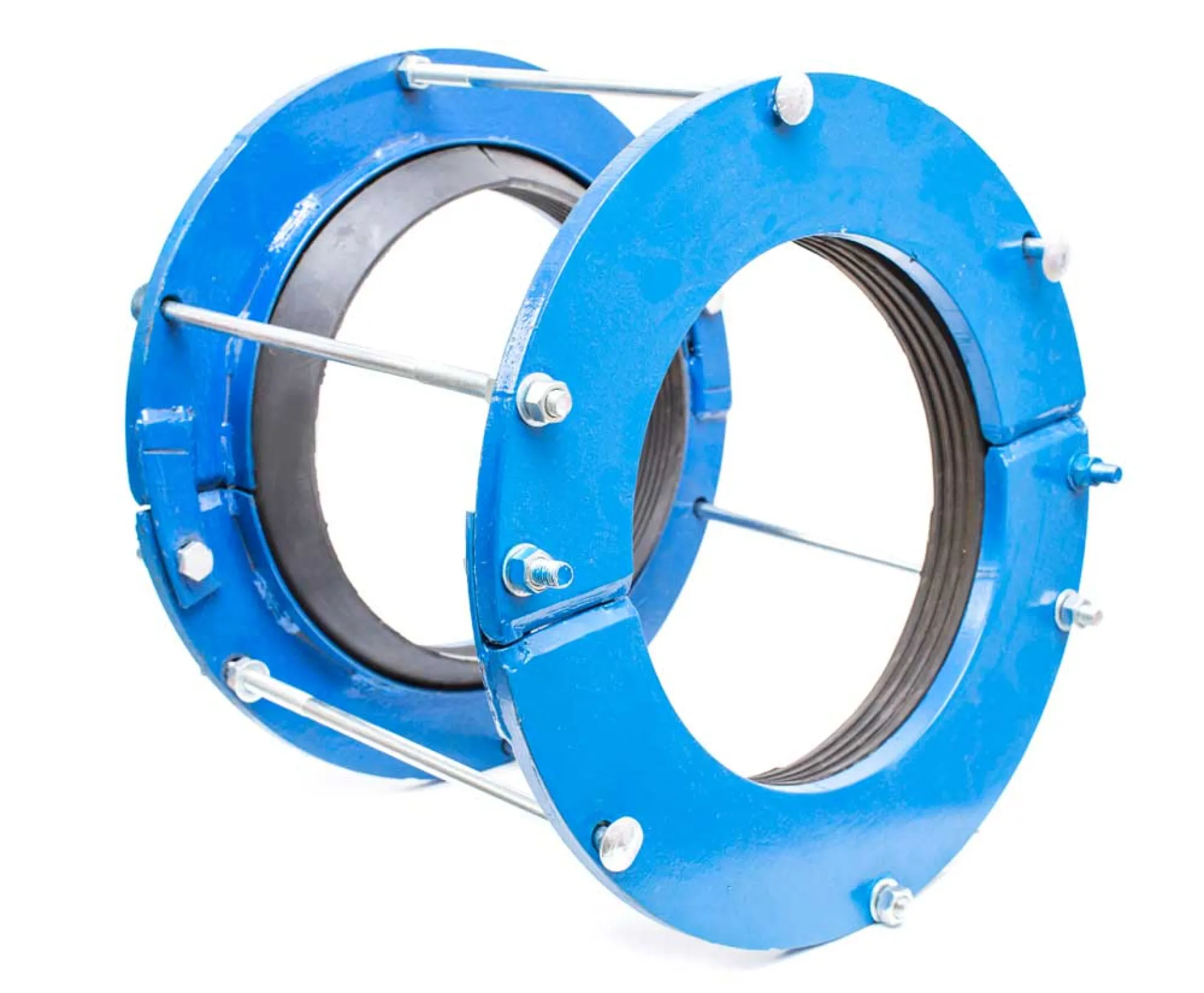
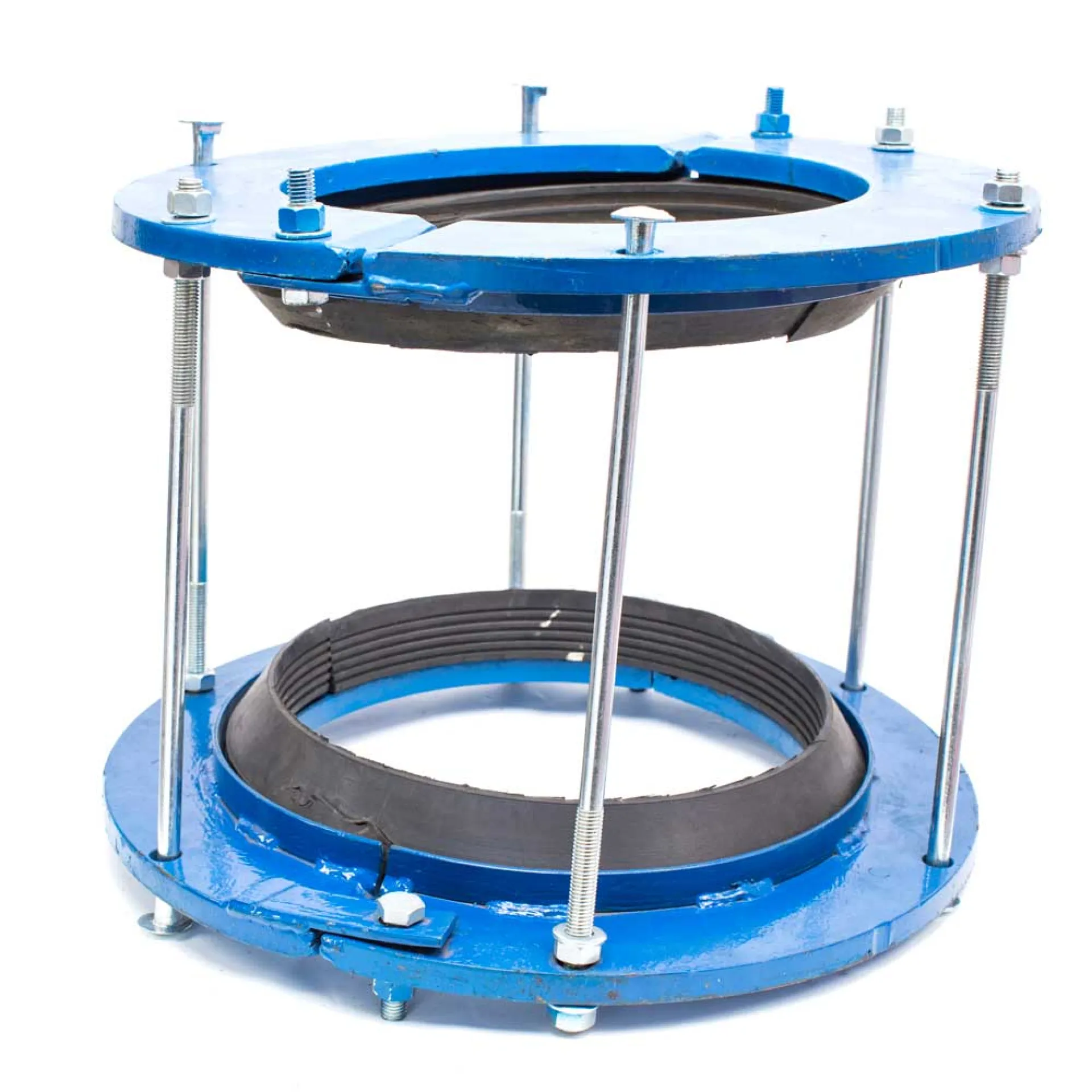
This instruction has been prepared for the safe and leak-tight installation of bell joınt leak couplıngs used to repair gasket failures in pipe sleeves of ductile iron, asbestos cement (AC), GRP and concrete pipelines without pipe cutting or service interruption.
- Pre-Installation Preparation
- Product Check:
Verify the label information on the adaptor (DN size and tolerance range) and ensure it is suitable for the pipe and sleeve diameters.
- Surface Cleaning:
Clean rust, dirt, scale, and old coatings from the pipe and sleeve surfaces using a wire brush.
The surface in contact with the sealing gasket must be smooth and clean.
- Installation Steps
- Lubrication:
Apply a silicone-based lubricant suitable for potable water to the gasket and pipe surface.
(Do not use oil-based lubricants as they may damage the gasket.)
- Gasket Placement:
Wrap the sealing gaskets around the pipe from both sides of the sleeve and position them tightly against the sleeve.
Ensure that the gasket fully surrounds the pipe and that the ends meet evenly and properly.
- Placement of Pressure Flanges:
Position the semi-circular pressure flanges (half shells) around the pipe from top and bottom.
Insert the bolts into the connection lugs and assemble the flanges into a single unit.
Bring the assembled flanges close to the gasket and insert the tie rods (stud bolts) symmetrically.
- Tightening Procedure (Critical Step)
- Cross Tightening:
Tighten the bolts in a diagonal (crosswise) sequence (e.g., 12–6 o’clock, 3–9 o’clock).
This ensures uniform compression of the gasket.
- Gradual Tightening:
First hand-tighten all bolts, then tighten gradually in multiple passes using a wrench.
Ensure that the gap between the gasket, pipe, and sleeve remains uniform during tightening.
- Final Check and Testing
- Visual Inspection:
Check that the gap between the pressure flanges, pipe, and sleeve is uniform around the entire circumference.
- Pressure Test:
Perform a low-pressure leak test before commissioning the pipeline.
If leakage is detected, recheck and retighten the bolts.
SAFETY NOTES
- Wear protective gloves and safety footwear during installation.
- Ensure that the protective coating of bolts (galvanized, Dacromet, etc.) is not damaged to maintain corrosion resistance.
|
No
|
Component Name
|
Material and Technical Details
|
|
1
|
Sleeve
|
ST 37 Steel. High-strength structural body.
|
|
2
|
End Rings
|
Ductile Iron (GGG40/50) / ST 37 Steel. Pressure end caps applying force to the gasket.
|
|
3
|
Tee Bolts/Bolts
|
Zinc-Coated Grade 8.8 Steel / AISI 304 / 316 Stainless Steel. High corrosion resistance.
|
|
4
|
Conical Gasket
|
EPDM / NBR. Pressure-responsive sealing technology.
|
|
5
|
Nuts and Washers
|
Zinc-Coated Grade 8.8 Steel / AISI 304 / 316 Stainless Steel. Secure locking system.
|
|
6
|
Coating
|
Epoxy / Thermoplastic. Long-lasting protection and durability.
|
| REFERENCE DIAMETER (mm) |
FOR ACB PIPE SLEEVE |
| PN 2,5 |
PN 5 |
PN 7,5 |
PN 10 |
PN 12,5 |
PN 15 |
PN 17,5 |
| 100 |
✓ |
✓ |
✓ |
✓ |
✓ |
✓ |
|
| 125 |
✓ |
✓ |
✓ |
✓ |
✓ |
✓ |
✓ |
| 150 |
✓ |
✓ |
✓ |
✓ |
✓ |
✓ |
✓ |
| 175 |
✓ |
✓ |
✓ |
✓ |
✓ |
✓ |
✓ |
| 200 |
✓ |
✓ |
✓ |
✓ |
✓ |
✓ |
✓ |
| 250 |
✓ |
✓ |
✓ |
✓ |
✓ |
✓ |
✓ |
| 300 |
✓ |
✓ |
✓ |
✓ |
✓ |
✓ |
✓ |
| 350 |
✓ |
✓ |
✓ |
✓ |
✓ |
✓ |
✓ |
| 400 |
✓ |
✓ |
✓ |
✓ |
✓ |
✓ |
✓ |
| 450 |
✓ |
✓ |
✓ |
✓ |
✓ |
✓ |
✓ |
| 500 |
✓ |
✓ |
✓ |
✓ |
✓ |
✓ |
✓ |
| 600 |
✓ |
✓ |
✓ |
✓ |
✓ |
✓ |
✓ |
| 700 |
✓ |
✓ |
✓ |
✓ |
✓ |
|
✓ |
| 800 |
✓ |
✓ |
✓ |
✓ |
✓ |
|
|
| 900 |
✓ |
✓ |
✓ |
✓ |
✓ |
|
|
| Custom production is available for pipe diameters not listed. |